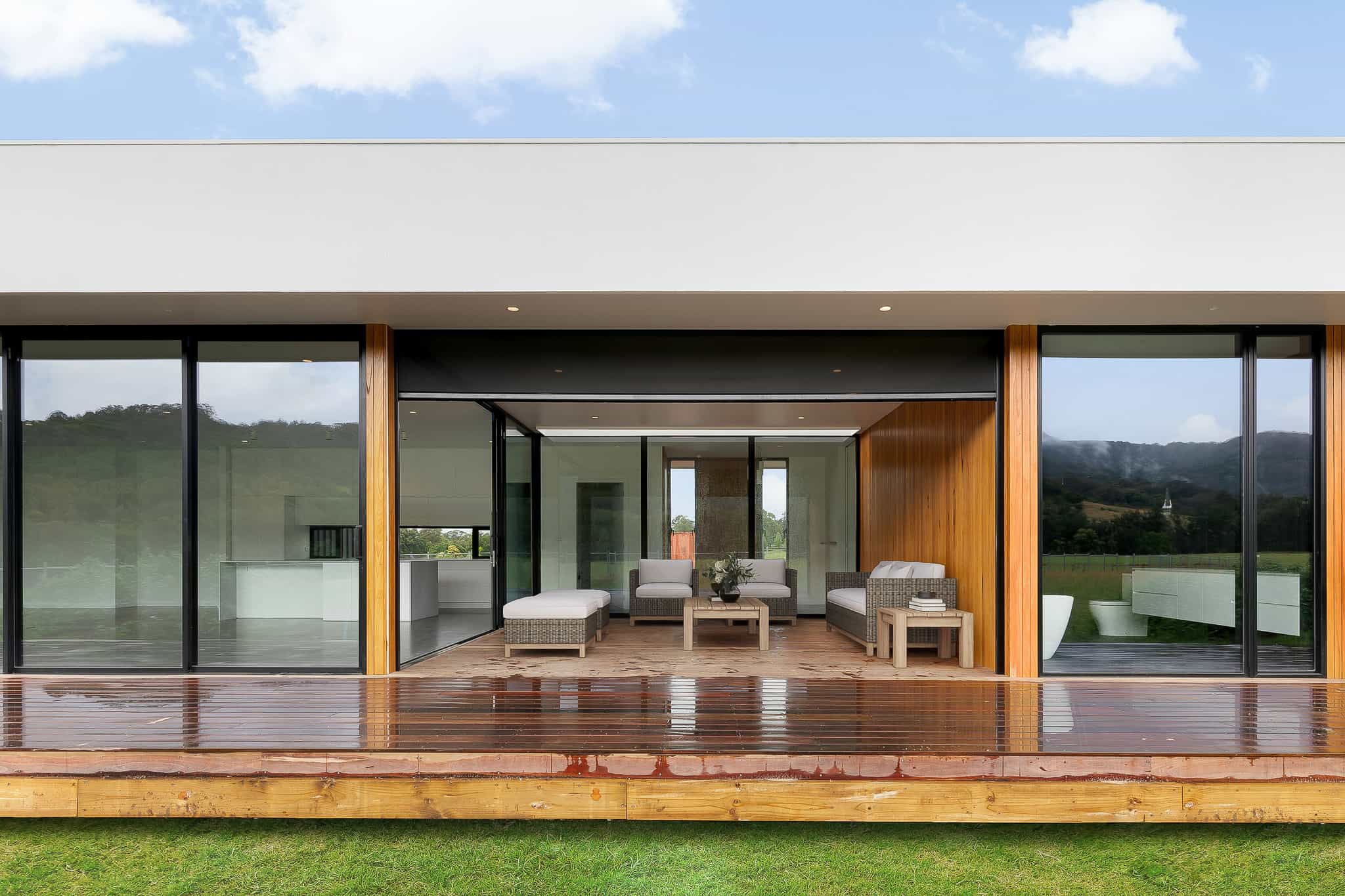
As local Wollongong builders, one of the most common questions we get from homeowners planning a new deck or pergola is: "Do I need to ask the council first?" Usually, no: your structure won't need council approval, provided it ticks specific boxes under patio and pergola building regulations, such as size, height, and setbacks.
The NSW planning rules don't make this easy to figure out on your own. Terms like exempt development, CDCs, and DAs aren't exactly backyard conversation. So before you start measuring up the back patio, here's a plain breakdown of how the building approval process actually works and what Wollongong homeowners specifically need to know.
Every residential structure in NSW falls into one of three planning pathways. Which one applies to your deck or pergola determines how much approval — if any — is required before you build.
| Pathway | Council Involved? | Typical Timeframe |
| Exempt Development | No | Build when ready |
| Complying Development (CDC) | No (private certifier) | 10–20 business days |
| Development Application (DA) | Yes | 6–12+ weeks |
Exempt Development means no local council approval and no certifier. Most standard decks and pergolas fall under this category, provided they meet the exempt development rules and criteria under the State Environmental Planning Policy (Exempt and Complying Development Codes) 2008.
A Complying Development Certificate (CDC) applies when a structure exceeds the exempt thresholds but still meets pre-approved building criteria. You don't go through council for a CDC; a private certifier handles it, typically within 10–20 business days. Wollongong City Council is itself an accredited certifying authority for CDCs, so you can go through Council or a private certifier.
A Development Application (DA) is the full council submission process. Development approval is reserved for larger or more complex structures, or properties with heritage or environmental constraints. Allow 6–12 weeks or more.
If your deck or pergola needs approval, it's far more likely to be a CDC than a DA based on Wollongong's local council regulations, and that's a meaningful difference in time and effort.
To qualify under the New South Wales SEPP, your deck, patio, or pergola must meet all of the following exempt development criteria:
A note for Wollongong homeowners: The 1m floor height rule is the one that catches people off guard most often. Suburbs like Figtree, Mt Keira, Corrimal, and Balgownie have plenty of sloping blocks, and once you account for the fall of the land, a deck that feels modest can easily sit higher than 1m above ground at one end. If your block isn't flat, check this carefully before assuming exempt status.
If any of the following apply, you'll need either a CDC or a DA before you build:
But needing approval doesn't mean a lengthy process. In most cases, a CDC, through a private certifier, can get the job done in 2 to 4 weeks.
Even if your deck or pergola qualifies as exempt development, it still needs to comply with the Building Code of Australia (BCA). Structural adequacy isn't checked by the local council, but it's still required. That sits with the builder and the owner.
A few other things that still apply after you've confirmed exempt status:
And one more thing worth knowing: uncertified or non-compliant structures can complicate a property sale. Banks and conveyancers regularly request documentation for decks and pergolas during settlement to inform the property value. An outdoor structure built without required approval — or without BCA-compliant construction — can delay or derail a sale, or require expensive retrospective certification.
Worth knowing for Wollongong specifically: Council operates under the Wollongong Development Control Plan (DCP) 2009 alongside state SEPP requirements, so local rules add a layer on top of the state planning policy.
The design stage is the right time to sort compliance, not after plans are drawn. Getting dimensions, height, and setbacks right from the start is straightforward when you know what you're working toward. Change them after the fact, and you're wasting time and money.
Building first and asking questions later carries real risk: forced removal, Council rectification orders, fines, and complications at the point of sale.
We've navigated the CDC and DA process for plenty of Wollongong homeowners, and we manage permits, inspections, and approvals as part of every build. You shouldn't have to figure out the planning rules on top of everything else that comes with a renovation. That's our job.
If you're planning a deck or pergola in the Illawarra, talk to the A Class Building team before you start. We'll tell you exactly where your project sits and take it from there.
Most decks and pergolas in Wollongong don't need local council approval, but the rules are specific. The 1m floor height rule regularly catches people on sloping blocks. If approval is needed, a CDC is usually the path, not a full DA. And even without any approval required, proper construction and documentation matter when it comes time to sell. If you're unsure, professional advice from an experienced builder before starting your patio or pergola project can save you endless time, money and headaches down the line.
Planning a deck or pergola in Wollongong? Get in touch with A Class Building to talk through your project.